Zipline Installation: More Than Just Stretching a Cable
At Munnar Adventures and Sports Pvt. Ltd., we specialize in designing and installing high-quality zipline systems for resorts, adventure parks, eco-tourism destinations, educational institutions, and government tourism projects across India.
What is a Zipline?
A zipline is an aerial ropeway system where participants travel from one point to another using gravity while securely attached to a steel cable through a specialized pulley system.
Modern ziplines can range from:
- Children's adventure ziplines
- Recreational resort ziplines
- Dual racing ziplines
- Long-distance valley crossings
- High-speed adventure experiences
- Multi-stage canopy tours
Every project requires custom engineering based on terrain, elevation, rider capacity, and environmental conditions.
Why Professional Installation Matters
A zipline is a technical engineering structure—not simply a cable suspended between two points.
Professional installation ensures:
- Maximum rider safety
- Correct cable tension
- Proper structural load distribution
- Reliable braking systems
- Smooth rider experience
- Long operational life
- Reduced maintenance costs
- Compliance with safety standards
Improper installation can lead to excessive cable sag, uncomfortable rides, increased wear on equipment, and serious safety risks.
The Zipline Installation Process
1. Site Survey
Every successful project begins with a detailed site inspection.
Our team evaluates:
- Elevation difference
- Distance between towers
- Natural terrain
- Wind exposure
- Soil conditions
- Rock stability
- Tree clearance
- Visitor access
- Emergency evacuation routes
This survey determines whether the location is suitable for a safe and enjoyable zipline.
2. Route Design
Using survey data, engineers determine:
- Cable length
- Ride speed
- Rider weight limits
- Cable sag
- Landing angle
- Braking distance
- Tower positions
The goal is to achieve an exciting ride while maintaining complete rider control.
3. Structural Design
Depending on the location, support structures may include:
- Steel towers
- Reinforced concrete foundations
- Natural rock anchors
- Heavy-duty tree protection systems (where appropriate)
- Hybrid tower systems
Each structure is engineered to withstand dynamic rider loads, environmental forces, and long-term operation.
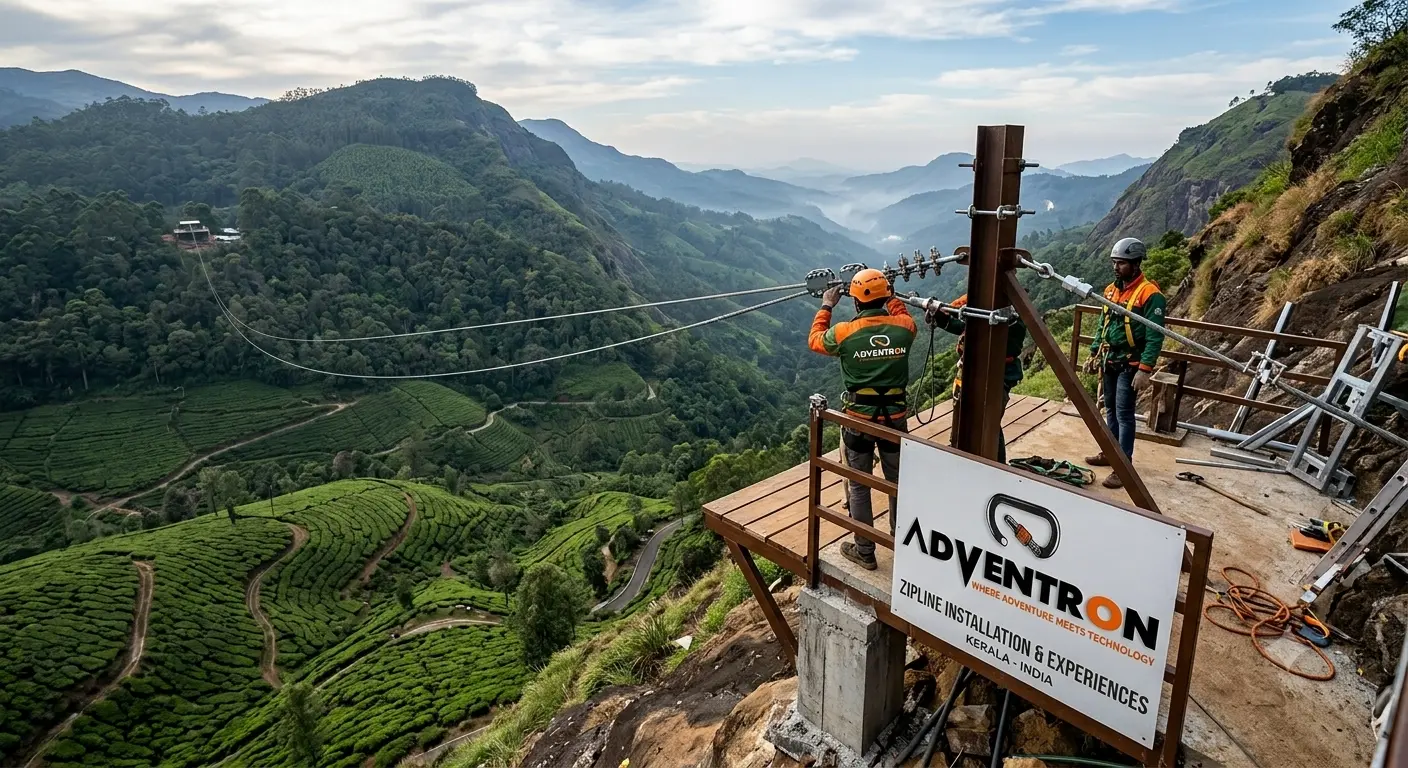
4. Cable Installation
High-strength galvanized steel cables are installed using precision equipment.
This stage includes:
- Cable pulling
- Cable anchoring
- Tension adjustment
- Alignment verification
- Load balancing
Accurate cable tension is essential for rider comfort and system longevity.
5. Braking System Installation
Modern zipline systems use advanced braking solutions such as:
- Spring brake systems
- Gravity braking
- Passive braking
- Magnetic braking (for selected installations)
- Backup braking systems
The appropriate braking method depends on terrain, speed, and project requirements.
6. Safety Equipment Integration
Each zipline is equipped with compatible safety systems, including:
- Full-body harnesses
- Certified helmets
- Trolleys
- Lanyards
- Carabiners
- Backup connectors
- Rescue equipment
Only certified equipment should be used for commercial operations.
7. Testing and Commissioning
Before opening to the public, every installation undergoes:
- Static load testing
- Dynamic load testing
- Speed testing
- Brake testing
- Anchor inspection
- Operational trials
- Safety checklist verification
Only after passing all inspections is the zipline approved for operation.
Types of Zipline Projects We Install
Resort Ziplines
Enhance guest experiences with scenic rides that add value to your property and encourage repeat visits.
Adventure Parks
High-capacity systems designed for continuous commercial operation.
Eco-Tourism Projects
Low-impact installations that blend with natural landscapes while preserving the environment.
Educational Institutions
Adventure-based learning systems for schools, colleges, and training centers.
Government Tourism Projects
Custom-built attractions that promote local tourism and sustainable adventure activities.
Why Choose a Dual Zipline?
A dual zipline allows two riders to experience the adventure side by side.
Benefits include:
- Higher visitor capacity
- Reduced waiting times
- Family-friendly experiences
- Competitive racing experiences
- Increased social media appeal
- Higher revenue potential
Safety Is Our Highest Priority
Safety is the foundation of every project we undertake.
Our installation process emphasizes:
- Thorough risk assessment
- Quality materials
- Precision engineering
- Regular inspections
- Staff training
- Rescue planning
- Preventive maintenance
Adventure should always be exciting—but never compromise on safety.
Maintenance After Installation
A professionally installed zipline requires routine maintenance, including:
- Daily visual inspections
- Weekly equipment checks
- Monthly cable inspection
- Tension verification
- Lubrication where required
- Annual structural assessment
- Replacement of worn components
Regular maintenance extends the life of the installation and ensures safe operation.
Why Partner with Munnar Adventures and Sports Pvt. Ltd.?
With years of experience in adventure activity installations, we provide complete turnkey solutions—from concept and design to installation, testing, and staff training.
Our services include:
- Site feasibility studies
- Custom engineering and design
- Zipline installation
- Adventure park development
- Rope course installation
- Technical consultancy
- Safety audits
- Maintenance support
- Operator training
Whether you are developing a new adventure destination or upgrading an existing facility, our experienced team delivers reliable, high-quality installations tailored to your site.
Frequently Asked Questions
How long does a zipline installation take?
Most projects are completed within a few weeks, depending on terrain, accessibility, and project complexity.
Can a zipline be installed in hilly areas?
Yes. Mountainous terrain is often ideal for gravity-assisted ziplines, provided a proper site survey and engineering assessment are conducted.
Is regular maintenance necessary?
Absolutely. Routine inspections, preventive maintenance, and periodic safety checks are essential for safe and reliable operation.
Can resorts install dual ziplines?
Yes. Dual ziplines are especially popular at resorts and adventure parks because they increase rider capacity and provide a shared experience.
Ready to Build Your Adventure Attraction?
If you're planning to add a zipline to your resort, adventure park, eco-tourism project, or educational campus, Munnar Adventures and Sports Pvt. Ltd. can help bring your vision to life with professional design, precision installation, and a strong commitment to safety.
Let's create an adventure that visitors will never forget.