Neelakurinji Bloom in Munnar 2026 – Where to See the Purple Hills & How to Reach
Updated: September 2026
Munnar is wearing a spectacular shade of blue and purple again.
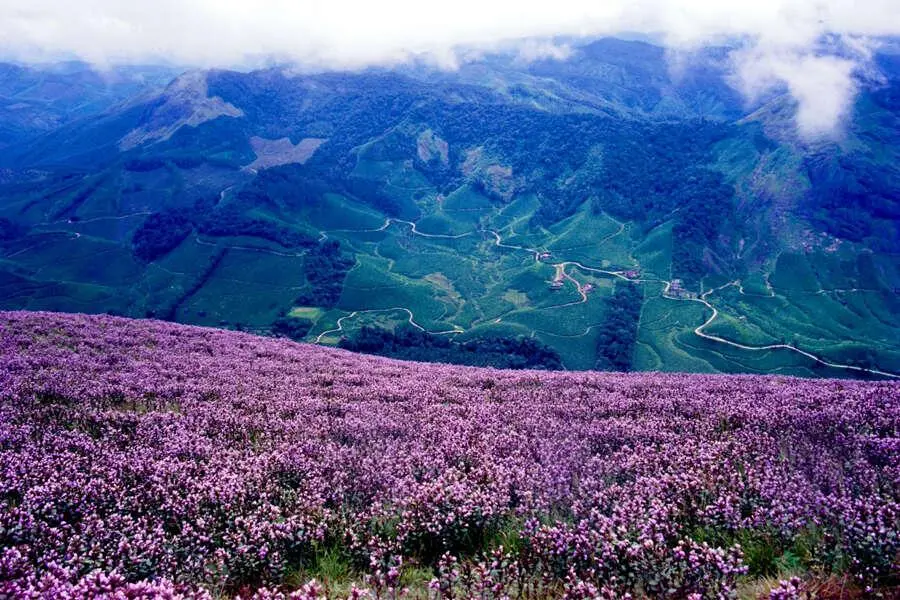
The rare Neelakurinji (Strobilanthes kunthiana) has started blooming across several high-altitude areas around Munnar, creating one of the most extraordinary natural spectacles in Kerala.
For travellers planning a Munnar trip in September 2026, this is a special opportunity to witness the famous Kurinji bloom — but knowing where the flowers are actually blooming and how to reach the viewing areas is important.
The main 2026 viewing areas include Chokramudi Hills and the Mattupetty–Korandakkad region. Flowers have also been reported in parts of Munnar town, Nallathanni and Ikka Nagar.
Neelakurinji is a beautiful blue-purple flowering plant found in the high-altitude grasslands of the Western Ghats.
Its scientific name is Strobilanthes kunthiana.
One of the most fascinating things about this plant is its flowering cycle. Certain populations bloom approximately once every 12 years. When thousands of plants flower at the same time, entire hillsides can appear covered by a blue-violet carpet.
This rare phenomenon is one of the reasons Munnar attracts nature lovers, photographers and travellers from across India.
Why Is Neelakurinji Blooming in 2026?
There is some confusion about the year because many people remember the spectacular Neelakurinji bloom at Eravikulam National Park in 2018 and expect the next major bloom there around 2030.
The 2026 flowering does not mean that the 2030 bloom has arrived early.
Different populations of Neelakurinji in the Munnar high ranges follow different flowering cycles.
The Mattupetty–Kannimala population flowered in 1990, 2002 and 2014, putting it on a 2026 cycle. The Chokramudi population also flowered previously in 2014 and is flowering again in 2026.
So, 2026 is a genuine Neelakurinji season in Munnar — but it is different from the famous Eravikulam 2030 cycle.
Why Is Neelakurinji Blooming in 2026?
There is some confusion about the year because many people remember the spectacular Neelakurinji bloom at Eravikulam National Park in 2018 and expect the next major bloom there around 2030.
The 2026 flowering does not mean that the 2030 bloom has arrived early.
Different populations of Neelakurinji in the Munnar high ranges follow different flowering cycles.
The Mattupetty–Kannimala population flowered in 1990, 2002 and 2014, putting it on a 2026 cycle. The Chokramudi population also flowered previously in 2014 and is flowering again in 2026.
So, 2026 is a genuine Neelakurinji season in Munnar — but it is different from the famous Eravikulam 2030 cycle.
2. Korandakkad – Mattupetty
Another spectacular Neelakurinji bloom has been reported around Korandakkad near Mattupetty.
Large areas of the hills in the Kanan Devan Hills Plantations area have turned purple and blue following the flowering that began in late August.
The trekking route begins near High Range School at Korandakkad and covers approximately 2 kilometres.
Unlike the Chokramudi forest area, this is plantation land, so visitors must follow the plantation's entry arrangements and obtain the required permission or ticket.
How to reach Korandakkad
From Munnar:
Munnar → Mattupetty → Korandakkad
The entry point is near High Range School.
Visitors should check the current entry arrangements before starting the trip because access to plantation land is controlled.
3. Munnar Town, Nallathanni & Ikka Nagar
Neelakurinji flowers have also started appearing in several locations around Munnar town, including Nallathanni and Ikka Nagar.
However, these locations should not be confused with the designated viewing areas.
The extent of flowering can change rapidly depending on weather and local conditions.
How to Reach Munnar
From Kochi
The most popular road route is:
Kochi → Muvattupuzha → Kothamangalam → Adimali → Munnar
Approximate distance:
125–135 km
Travel time depends on traffic and road conditions.
From Cochin International Airport
Cochin International Airport → Angamaly → Kothamangalam → Adimali → Munnar
This is a convenient route for visitors arriving by air.
From Kottayam
Travellers from Kottayam can reach Munnar through the high-range route via:
Kottayam → Ponkunnam → Kanjirappally → Mundakkayam → high ranges → Munnar
Road conditions and travel times can vary, so check the route before starting your journey.
When Is the Best Time to See Neelakurinji?
September 2026 is the key month.
The flowering has already started, and officials expect the display to become more spectacular as more buds open.
Current reports indicate that the bloom could remain visible through approximately 30 September, although the exact duration depends on weather.
Best time of day for photography
Early morning
Morning light, mist and the blue-purple flowers create excellent conditions for landscape photography.
For the best experience, start early and avoid the busiest hours.
Photography Tips
Neelakurinji is best photographed as a landscape, rather than simply as a close-up flower.
Try these shots:
1. Purple hills + mountains
Use a wide-angle lens to show the scale of the flowering landscape.
2. Flowers + mist
Early morning mist can create a dramatic Munnar atmosphere.
3. Flower close-up
Capture the delicate blue-purple petals.
4. Traveller + landscape
Include a person at a safe distance to show the scale of the hills.
5. Sunrise landscape
Early morning light can produce beautiful photographs.
Remember
Never enter restricted areas or trample flowering plants to get a photograph.
Important: Do Not Pluck Neelakurinji
Neelakurinji is a protected plant, and authorities have issued strict warnings against plucking, uprooting or damaging the flowers.
Visitors should:
- Stay on designated trails
- Do not pluck flowers
- Do not uproot plants
- Do not walk through flowering patches
- Do not litter
- Follow Forest Department instructions
- Respect private plantation property
Forest authorities have warned that damaging or plucking the plants can lead to serious legal consequences.
Enjoy the flowers. Photograph the flowers. Leave the flowers for the next generation.
Make the Most of Your Munnar Trip
A Neelakurinji visit can easily be combined with other Munnar experiences.
Depending on your available time, you can explore:
Mattupetty Dam
Echo Point
Kundala Lake
Top Station
Tea plantations
Eravikulam National Park
Chokramudi
Kolukkumalai
Meesapulimala
Munnar town
For adventure travellers, Munnar Adventures offers activities including trekking, kayaking, ziplining, river crossing, jumaring, guide services and camping experiences.
Why Stay in Munnar?
If you are visiting Munnar specifically for Neelakurinji, staying locally gives you more flexibility.
You can start early, avoid peak traffic and combine the flower-viewing experience with other attractions and adventure activities.
Munnar Adventures is based in Munnar and provides adventure and outdoor experiences for visitors exploring the high ranges.
Planning your Munnar adventure?
Contact Munnar Adventures
Munnar, Kerala – 685612
+91 8891256623
adventure@munnaradventures.com
| Information | Details |
| Flower | Neelakurinji |
| Scientific name | Strobilanthes kunthiana |
| Main 2026 viewing area | Chokramudi Hills |
| Another major area | Korandakkad, Mattupetty |
| Flowering season | 2026 |
| Best month | September |
| Best time for photography | Early morning |
| Chokramudi access | Designated Forest Department route |
| Korandakkad access | Plantation-controlled entry |
| Famous Eravikulam cycle | Expected around 2030 |
| Important rule | Do not pluck or damage flowers |
Experience Munnar's Purple Season
The 2026 Neelakurinji bloom is a rare opportunity to experience the high-altitude landscapes of Munnar at their most beautiful.
Whether you are a photographer, nature lover, trekker or simply someone looking for an unforgettable Munnar experience, the purple hills are worth seeing.
But the beauty of Neelakurinji depends on protecting the fragile grasslands where it grows.
Come to Munnar. See the purple hills. Capture the memories. Leave the flowers untouched.